

When we think about protecting our homes in Louisville from water damage, one of the first things that comes to mind is the sump pump. Proper sump pump installation Louisville is key to keeping basements dry. We’ll look at how to pick the right size for your sump basin and what backup power options make sense for our area.
Key Takeaways
- Choosing the correct sump basin size depends on how much water your home might get and how fast it comes in.
- Backup power for your sump pump is important because the main power can go out during storms, which is often when you need it most.
- Both battery and water-powered backup pumps have their pros and cons, so we need to consider what works best for our specific home and budget.
Understanding Sump Pump Installation Louisville Needs
When we talk about keeping your Louisville home dry, especially during those heavy rain seasons, the sump pump system is a big part of the picture. It’s not just about having a pump; it’s about having the right system in place. This means looking at both the basin where the water collects and the pump itself.
Determining the Right Sump Basin Size
The basin, or pit, is where groundwater flows before the pump kicks in. Getting the size wrong can lead to problems. Too small, and it might fill up too quickly, overwhelming the pump or causing it to cycle too often, which wears it out faster. Too large, and the pump might not cycle enough, letting sediment settle at the bottom and potentially causing issues.
Here are some things we consider when figuring out the right basin size for your home:
- Basement Square Footage: Larger basements generally mean more potential for water to collect.
- Soil Type: Clay soils drain slower than sandy soils, meaning water might sit longer.
- Local Rainfall Patterns: Louisville gets its share of rain, so we look at historical data for your specific area.
- Groundwater Levels: Some areas naturally have higher groundwater tables.
We aim for a basin size that allows the pump to run for a decent amount of time (usually 30-60 seconds) before shutting off. This prevents rapid cycling and helps keep the pump in good shape.
Factors Influencing Sump Pump Capacity
Beyond the basin, the pump’s capacity is key. This refers to how much water it can move in a given period, usually measured in gallons per hour (GPH). Several factors play into what capacity you’ll need:
- Water Inflow Rate: How fast does water enter your basement? This is influenced by the factors mentioned above.
- Discharge Pipe Size and Length: A longer or narrower pipe means more resistance, reducing the effective GPH.
- Head Pressure: This is the vertical distance the pump has to push water, from the bottom of the pit to the discharge point outside.
We often use charts or simple calculations to match the pump’s GPH rating to your home’s specific needs. For instance, a typical residential sump pump might handle 3,000-5,000 GPH, but in areas prone to significant water intrusion, we might look at higher capacity models.
Choosing the correct basin and pump capacity isn’t a one-size-fits-all situation. It requires a careful look at your home’s unique characteristics and the local environment. Getting this right from the start saves a lot of headaches down the road.
Essential Backup Systems for Louisville Homes
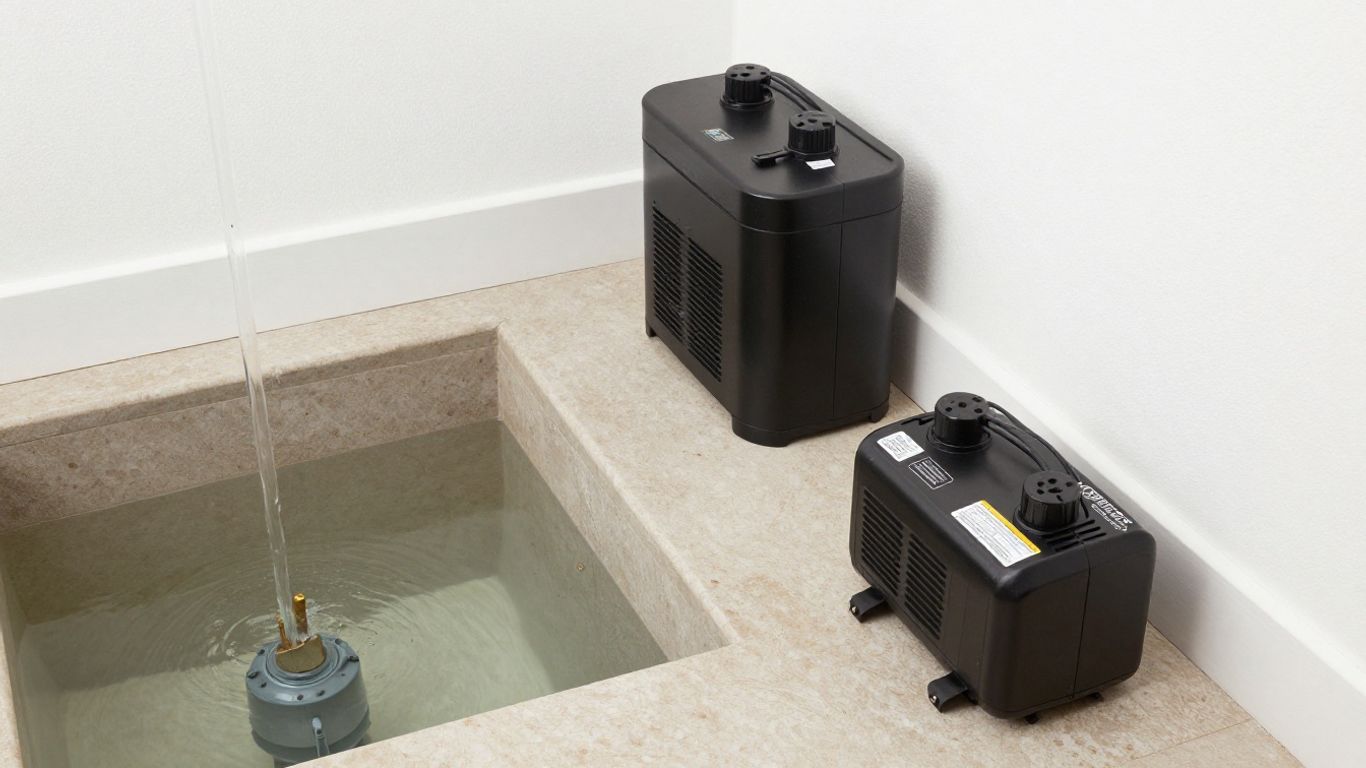
Even with a properly sized sump basin and a reliable primary pump, power outages can leave your basement vulnerable. We’ve seen it happen too many times here in Louisville – a heavy storm rolls in, the power goes out, and suddenly, water starts creeping into homes. That’s why having a backup system isn’t just a good idea; it’s a necessity for many homeowners.
Battery Backup Sump Pump Options
When the main power fails, a battery backup sump pump takes over. These systems use a deep-cycle marine battery, similar to what you’d find in a boat, to power a secondary pump. It’s a pretty straightforward setup, but there are a few things to consider:
- Battery Type: Deep-cycle batteries are designed for prolonged discharge, which is exactly what you need during an extended outage. Standard car batteries won’t cut it.
- Battery Life: How long will the battery last? This depends on the pump’s draw and the battery’s capacity. We recommend checking the manufacturer’s specs and considering your typical outage duration.
- Maintenance: Batteries need occasional checking and eventual replacement. It’s not a set-it-and-forget-it system.
A good battery backup system can keep your basement dry for hours, even days, depending on the battery bank’s size and the pump’s usage.
Water-Powered Backup Pump Considerations
Another option, especially if you have reliable municipal water pressure, is a water-powered backup pump. These pumps don’t rely on electricity at all. Instead, they use the Venturi effect – the principle that a fluid’s speed increases as it passes through a constricted section of pipe – to draw water out of your sump pit and discharge it.
Here’s what makes them different:
- No Electricity Needed: This is their biggest advantage. They work even during the longest power outages.
- Water Usage: They do consume water from your municipal supply to operate. This means they can potentially increase your water bill during a storm.
- Performance: Their pumping capacity is often tied to your home’s water pressure. If your water pressure drops, so does the pump’s effectiveness.
- Installation: They typically connect to your home’s water supply and drain lines.
When choosing a backup system, think about your specific needs. How long do storms typically last in your area? What’s your water pressure like? What’s your budget? Answering these questions will help you pick the right protection.
We find that many homeowners in Louisville appreciate the peace of mind that comes with having a reliable backup. It’s an investment in protecting your home from potential water damage, especially during those unpredictable weather events we sometimes get.
Wrapping Up Sump Pump Talk
So, we’ve talked a lot about sump basins and making sure you have a backup plan. It might seem like a lot to think about, but getting this right means a lot for your home, especially here in Louisville with our weather. Taking the time to figure out the right size basin and what kind of backup system works best for you can save you a huge headache down the road. We hope this helps you feel more confident about protecting your basement from water. It’s really about peace of mind, knowing you’re prepared for whatever comes your way.
Frequently Asked Questions
How do we figure out the best size for our sump pump’s basin in Louisville?
To pick the right size basin, we need to think about how much water might enter our basement. We look at things like how much rain we get, the type of soil around our house, and if we have a high water table. A bigger basin can hold more water before the pump needs to turn on, which is good if you get a lot of water.
What happens if our main sump pump stops working?
We always recommend having a backup plan! The most common backup is a battery-powered pump. This kicks in if the power goes out, which often happens during big storms when the pump is needed most. Another option, though less common, is a pump that uses your home’s water pressure to work.
Why is having a backup sump pump so important for homes here?
Louisville can experience heavy rains and storms, and power outages can happen at the worst times. Without a backup, if the main pump fails or the power goes out, your basement could flood. A backup system gives us peace of mind, knowing our basement is protected even when things aren’t working normally.
Recent Comments