

When water starts showing up in our basements, it’s a real headache. We’ve looked into different ways to stop it, and two common ideas come up: French drains and waterproofing paints. Both aim to be basement waterproofing solutions, but they work in very different ways. We wanted to figure out which one is better for keeping our homes dry. This article breaks down what each option does, how they’re put in, and where they fall short, so we can make a smart choice for our basements.
Key Takeaways
- French drains manage water that’s already around the foundation by collecting and moving it away, which is good for serious water problems coming from the ground.
- Waterproofing paints create a barrier on the inside walls to stop small leaks, but they don’t fix the source of water issues and can sometimes trap moisture.
- The best choice for basement waterproofing solutions depends on the type and amount of water you’re dealing with; French drains are for bigger water problems, while paints are for minor dampness.
Understanding French Drains For Basement Waterproofing Solutions
When we talk about keeping our basements dry, one of the first things that often comes up is the French drain. It’s a pretty old idea, actually, but it works by dealing with water before it even gets a chance to bother your foundation. We’re talking about water that’s already in the ground, soaking around your basement walls. A French drain is essentially a trench filled with gravel that has a perforated pipe inside. Its main job is to collect that groundwater and send it away from your house.
How French Drains Divert Subsurface Water
The way these drains work is pretty straightforward. When rain falls or snow melts, water seeps into the ground. If your house is built on a slope, or if the soil around your foundation holds a lot of water, that moisture can build up. This is where the French drain comes in. We dig a trench that slopes away from your basement. Inside this trench, we lay a perforated pipe, usually wrapped in a filter fabric to stop dirt from clogging it. Then, we fill the trench with clean gravel. The water in the soil naturally flows downhill, and when it reaches the trench, it enters the gravel. From there, it’s directed into the pipe. Because the pipe is sloped, the water travels through it and is carried away to a lower point, like a storm drain, a dry well, or just further down your yard where it won’t cause problems. This system effectively lowers the water table around your foundation.
Installation Considerations For Effective Drainage
Getting a French drain installed right is key to making sure it actually does its job. It’s not just about digging a hole and throwing in some pipe. We need to think about a few things:
- Slope: The trench needs a consistent, gentle slope. Too steep, and the water rushes through too fast. Too flat, and it won’t drain properly. We usually aim for about a 1% to 2% grade.
- Depth and Width: The trench needs to be deep enough to intercept the water at the right level, typically below the basement floor. The width needs to accommodate the pipe and enough gravel to allow water to enter the pipe easily.
- Outlet Location: Where the water goes is super important. We have to make sure the outlet is significantly lower than the start of the drain and that it discharges water legally and without causing issues for neighbors or your own property.
- Pipe Material: Using the right kind of perforated pipe, often made of PVC, is important. It needs to be durable and allow water to enter freely.
- Gravel Quality: We use clean, washed gravel. If the gravel is dirty, it can clog the pipe and the filter fabric over time.
We’ve seen situations where a French drain was installed, but the slope was wrong, or the outlet was blocked. In those cases, the drain just became a stagnant pool of water, doing more harm than good. Proper planning and execution are really what make the difference between a working system and a costly mistake.
When we consider installing a French drain, we’re looking at a solution that tackles the problem of groundwater pressure from the outside. It’s a more involved process than just painting a wall, but for persistent moisture issues originating below ground, it’s often the most reliable approach we have.
Evaluating Waterproofing Paints As Basement Waterproofing Solutions
When we talk about keeping our basements dry, waterproofing paints often come up. We’ve all seen the ads, promising a simple fix for damp walls. But how well do they really work, and what’s the deal with applying them? Let’s break it down.
The Role Of Waterproofing Paints In Sealing Walls
Waterproofing paints are essentially thick coatings designed to create a barrier against moisture. They’re usually cement-based or acrylic, and when applied correctly, they can stop water from seeping through porous concrete or masonry walls. Think of it like painting a regular wall, but with a much tougher, more water-resistant finish. They work by filling in the tiny pores in the wall material, making it harder for water to get through. This can be a good first step for minor dampness or efflorescence (those white, powdery salt deposits).
Limitations And Proper Application Of Paints
Now, here’s where things get a bit more complicated. Waterproofing paints are best for managing hydrostatic pressure from the inside of the wall, not from the outside. This means they’re more effective against dampness that’s already inside the basement, rather than water that’s actively pushing against the foundation from the soil outside. If you have significant water intrusion, like leaks or cracks, paint alone probably won’t cut it. It’s like putting a band-aid on a broken bone; it might help a little, but it’s not addressing the root cause.
Applying these paints properly is also key. We need to make sure the surface is clean, dry, and free of any loose material. Cracks and holes should be patched first. Usually, you’ll need at least two coats, and sometimes more, depending on the product and the condition of the wall. It’s a bit of a process, and if you skip steps, you’re likely to end up with peeling paint and continued moisture problems.
Here are some general steps we usually follow:
- Surface Preparation: Clean the walls thoroughly. Remove any old paint, dirt, or mildew. A wire brush or pressure washer can be helpful here.
- Crack and Hole Repair: Fill any gaps or cracks with a suitable patching compound. Let it cure completely.
- Priming (if recommended): Some paints require a specific primer for best adhesion.
- Application: Apply the first coat evenly, working it into the surface. Let it dry according to the manufacturer’s instructions.
- Second Coat: Apply a second coat, often perpendicular to the first, for better coverage.
- Curing: Allow the paint to cure fully before exposing it to moisture or putting things back against the wall.
We’ve found that while waterproofing paints can offer a decent improvement for light dampness, they’re not a magic bullet for serious basement water issues. They work best as a supplementary measure or for very minor problems. Trying to rely on them for major leaks is usually a recipe for disappointment down the road.
Comparing French Drains And Waterproofing Paints
Addressing Different Types Of Water Intrusion
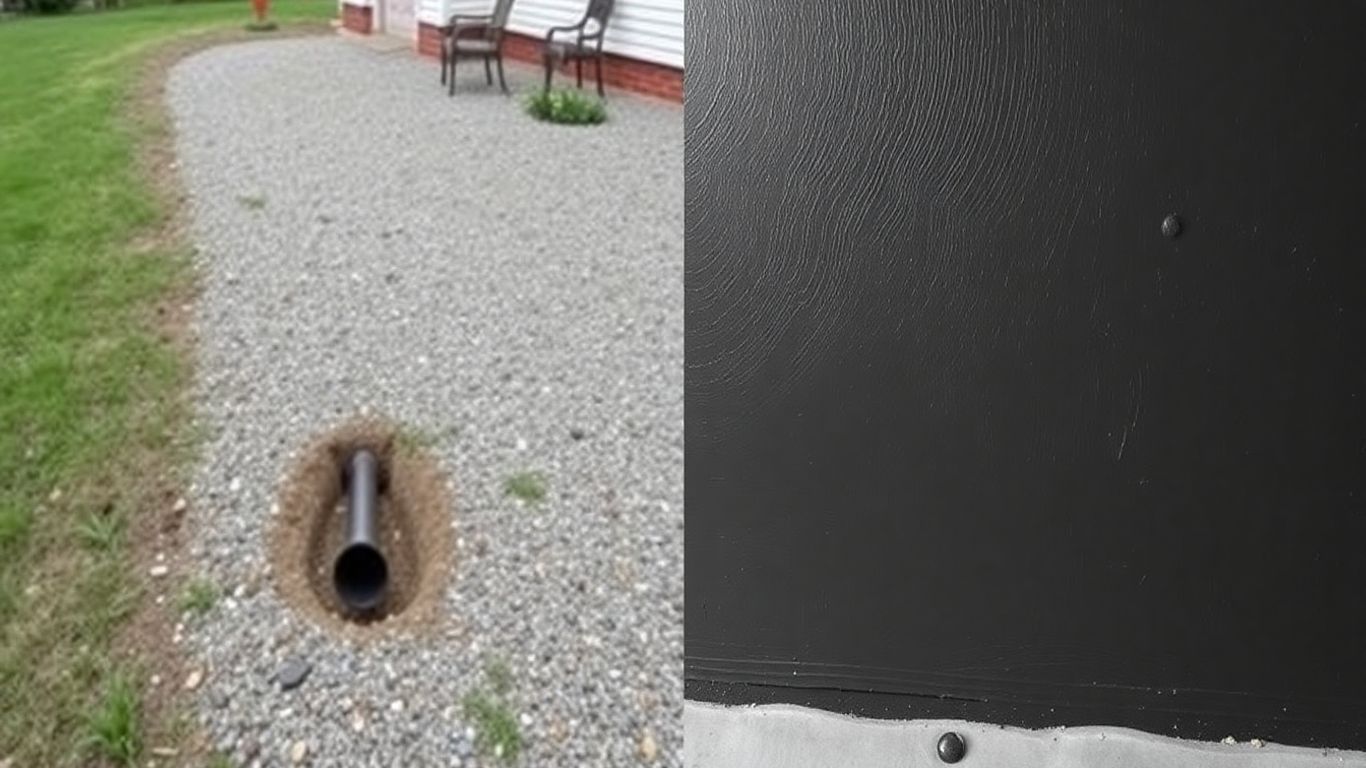
When we look at basement water problems, it’s not all the same. We see water coming in from different places and in different ways. French drains are built to handle water that’s already underground, the kind that builds up around your foundation. Think of it like a gutter system for the soil. It collects that water and sends it away before it can even think about seeping through your basement walls or floor. This is especially useful if you have hydrostatic pressure, where the water table is high.
Waterproofing paints, on the other hand, are more about stopping water that’s already at the wall surface. They create a barrier, a sort of shield, against moisture that might be coming through tiny cracks or pores in the concrete or masonry. They’re good for minor dampness or condensation, but they aren’t designed to fight against a constant flow of water or significant pressure from the outside.
Here’s a quick breakdown:
- French Drains: Best for subsurface water, high water tables, and hydrostatic pressure.
- Waterproofing Paints: Best for minor dampness, condensation, and sealing surface-level moisture.
We often find that the best approach depends entirely on where the water is coming from.
It’s important to remember that a paint is a surface treatment. It can’t magically stop water that’s pushing hard against your foundation from the outside. A drain system, however, works before the water gets to the wall in the first place.
Choosing The Right Basement Waterproofing Solutions For Your Home
So, how do we pick? For us, it starts with figuring out the source of the water. If you’ve got puddles forming in the yard after rain, or if your basement feels generally damp even when it’s not raining hard, a French drain system might be the more robust solution. It’s a bigger job, for sure, involving excavation and pipe installation, but it tackles the problem at its root.
If you’re just seeing a bit of moisture on the walls after a heavy rain, or maybe some mildew growth in a corner, a good quality waterproofing paint could be enough. We’d still recommend prepping the walls properly – cleaning, repairing cracks – before applying any paint. It’s not a ‘paint and forget’ kind of fix.
Sometimes, we even see situations where both are needed. Maybe a French drain handles the bulk of the underground water, and then a paint is used on the interior walls to seal up any remaining minor seepage or condensation. It really comes down to assessing your specific basement and the conditions around your home. We always advise a thorough inspection to make the right call.
So, What’s the Verdict?
After looking at both French drains and waterproofing paints, it’s clear there isn’t one single answer that fits everyone. We’ve seen how French drains tackle water issues from the outside, moving it away before it even gets near your foundation. They’re a pretty solid choice for serious drainage problems. On the other hand, waterproofing paints offer a simpler, more direct approach to sealing up your walls. They can be great for smaller leaks or as an extra layer of defense. For us, the best path often involves a mix of both, or at least understanding what kind of problem we’re dealing with. A French drain might be overkill if you just have a little dampness, and paint alone won’t fix a yard that’s basically a swimming pool after rain. Think about your specific situation, the severity of the water problem, and your budget. That’s how we’ll figure out the right solution for keeping our homes dry.
Frequently Asked Questions
Can a French drain completely stop water from coming into our basement?
French drains are excellent at moving water away from your basement’s foundation before it can seep in. They work by collecting underground water and guiding it safely away from the house. While they are very effective for managing water that builds up around the foundation, they might not be the only solution if water is coming in through cracks in the walls or floor.
How long do waterproofing paints usually last on basement walls?
Waterproofing paints can offer a good first line of defense against minor dampness and small leaks. However, their lifespan can vary. We often find that they work best for lighter moisture issues and might need reapplication every few years, especially if the water pressure against the walls is significant. They are not a permanent fix for major water problems.
Which method should we choose if we have water coming in from different places?
When water enters your basement from various sources, such as water pooling outside and moisture seeping through walls, we usually recommend a combined approach. A French drain system can handle the water around your foundation, while a good quality waterproofing paint or even a more robust sealing method can address issues directly on the walls. We assess each situation carefully to suggest the most effective strategy for your specific needs.
Recent Comments