

Spring’s arrival often brings welcome warmth, but it can also mean a lot of water. We’ve all seen it – puddles that linger, soggy spots in the yard, and maybe even water creeping closer to the house. Managing this excess water is key to keeping our properties in good shape. We’re going to look at some simple ways to deal with spring rain, focusing on how two common methods, French drains and swales, can help with stormwater drainage solutions.
Key Takeaways
- French drains work by collecting surface and groundwater and moving it away from problem areas through a buried pipe. They are good for spots where water pools or seems to come from nowhere.
- Swales are shallow, wide ditches, often planted with grass, that guide water along a specific path. They slow down runoff and let water soak into the ground, which helps prevent erosion.
- Combining French drains and swales can create a strong system for managing spring water. This approach helps protect your yard and home from water damage by providing effective stormwater drainage solutions.
Implementing Effective Stormwater Drainage Solutions
Spring rains can really turn our yards into soggy messes, can’t they? We’ve been looking into ways to manage all that water, and two methods keep coming up: French drains and swales. They sound a bit technical, but really, they’re just smart ways to guide water where we want it to go, away from our homes and gardens.
Understanding French Drains for Yard Water Management
A French drain is basically a trench filled with gravel that has a perforated pipe inside. Its job is to collect surface water and groundwater and direct it away from an area. We’ve found they’re great for spots where water tends to pool, like near foundations or in low-lying parts of the yard.
Here’s a basic idea of how they work:
- Trench Digging: First, we dig a trench. The depth and width depend on how much water we need to handle, but usually, a foot or two deep is a good start.
- Pipe Placement: We lay a perforated pipe at the bottom of the trench. The holes let water seep in.
- Gravel Filling: The trench is then filled with clean gravel. This is key because the gravel allows water to flow easily to the pipe.
- Fabric Wrap: Often, the whole thing is wrapped in landscape fabric to stop soil and silt from clogging the gravel and pipe.
The main goal is to intercept water before it causes problems. We’ve seen them work wonders in preventing basement flooding and keeping garden beds from getting waterlogged. It’s a pretty straightforward system once you get the hang of it.
Designing Swales for Natural Water Flow
Swales are a bit different. Think of them as shallow, broad ditches or channels that are designed to slow down, filter, and absorb rainwater. Instead of just moving water quickly, they encourage it to spread out and soak into the ground. This is really good for the environment, as it helps recharge groundwater and reduces the amount of runoff hitting storm drains.
We’ve been looking at swales as a more natural approach. They can be integrated into the landscape design, looking like gentle depressions or berms rather than just a ditch.
Key features of a well-designed swale include:
- Gentle Slopes: The sides of the swale shouldn’t be too steep. This helps slow the water down.
- Vegetation: Planting grass, ground cover, or even native plants in the swale is important. The roots help filter the water and keep the soil from washing away.
- Proper Grading: The swale needs to be sloped correctly to direct water to where it needs to go, whether that’s a drainage area or a place where it can soak in.
We’ve found that swales are particularly effective at handling larger volumes of water over a wider area. They work with the natural contours of the land, making them a less intrusive solution than some other drainage methods. It’s all about working with nature, not against it.
Combining these two methods, French drains and swales, seems like a solid plan for tackling spring stormwater. We’re excited to see how they perform.
Optimizing Your Landscape for Spring Runoff
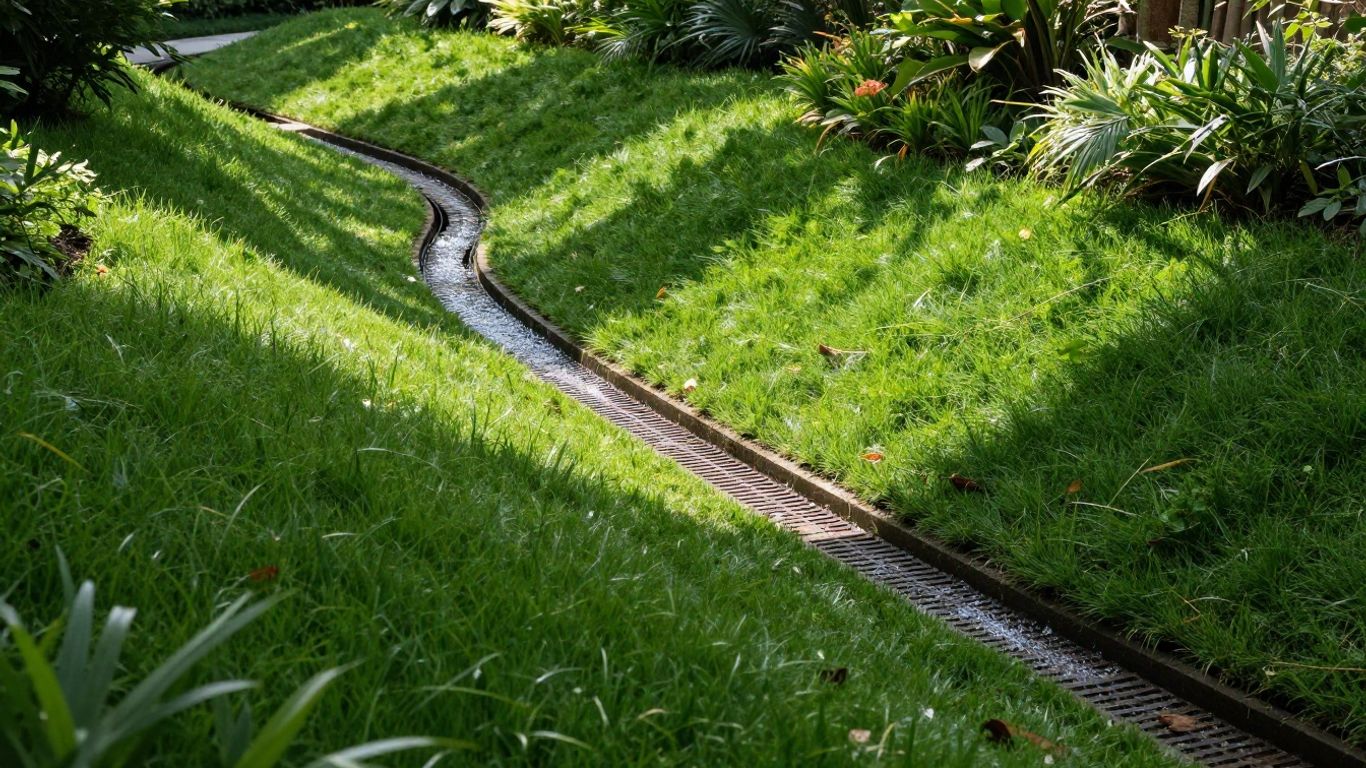
As spring approaches, we often see our yards become waterlogged. This is the time to really think about how our landscapes handle the melt and rain. We want to make sure our yards aren’t just surviving spring, but thriving. Getting our drainage systems right now means fewer headaches later.
Integrating French Drains with Existing Landscaping
Putting in a French drain isn’t just about digging a trench. We need to think about how it fits with what’s already there. Do we have flower beds nearby? Mature trees? We don’t want to disrupt established plants unnecessarily. Often, we can route a French drain along the edge of a garden bed or under a pathway. The key is to make it look like it belongs. We can cover the drain with decorative gravel or even plant low-lying ground cover over the top, as long as it doesn’t block the water flow. It’s about making the drain work for the landscape, not against it.
Here are a few things to consider when placing drains:
- Identify low spots where water collects.
- Note the direction water naturally flows across your property.
- Consider the proximity of existing trees and shrubs.
- Think about how the drain will connect to a suitable outlet.
The Role of Swales in Preventing Soil Erosion
Swales are like gentle ditches, but they’re designed to slow down and absorb water, not just channel it away quickly. This is super important for stopping soil from washing away, especially on slopes. When water moves too fast, it picks up soil particles. A swale breaks up that fast flow. It gives the water time to soak into the ground, which also helps recharge groundwater. We can plant grasses and other deep-rooted plants in swales. These plants help hold the soil in place and further filter the water.
Swales work best when they follow the natural contour of the land. This helps them capture water effectively without causing new erosion problems. We’ve found that a gentle slope is usually ideal for a swale’s function.
We can also think about swales as part of a larger system. They can work hand-in-hand with French drains. A French drain might collect water from a specific problem area, and then direct it into a swale for slower release and absorption. This combination gives us a really robust way to manage spring runoff and keep our soil where it belongs.
Wrapping Up Our Stormwater Talk
So, we’ve looked at how french drains and swales can really help manage all that extra water we get in the spring. It’s not just about keeping our yards from getting soggy, though that’s a big part of it. These methods help protect our homes from water damage and can even keep that runoff from causing problems downstream. Thinking about these solutions is a good step for any homeowner dealing with wet conditions. We hope this gives you a clearer picture of what’s possible and maybe even inspires you to look into what might work best for your property. Taking action now can save a lot of headaches later when the snow melts and the rain starts.
Frequently Asked Questions
What exactly is a French drain and how does it help with too much water in our yard?
Think of a French drain as a hidden helper for your yard. It’s basically a trench filled with gravel that has a pipe inside. When water builds up, it flows into the gravel, then into the pipe, and is carried away to a place where it won’t cause problems, like a lower part of your yard or a drainage system. We use them to stop soggy spots and keep our lawns from getting flooded, especially after heavy spring rains.
How do swales differ from French drains, and what’s their main job in controlling water?
Swales are like gentle, shallow ditches, often covered in grass, that are designed to guide water slowly across your property. Unlike French drains that collect water underground, swales work on the surface. Their main job is to slow down rainwater and let it soak into the ground naturally, which also helps prevent soil from washing away. We find they’re great for managing water flow and keeping our soil in place.
Can we combine French drains and swales, and is it a good idea for managing spring water?
Absolutely! Combining French drains and swales can be a really smart strategy for handling spring stormwater. We can use swales to direct excess water towards a French drain, which then takes it away efficiently. This two-pronged approach helps slow down the water with the swale and then collect and remove any remaining water with the drain. It’s an effective way to keep our yards dry and healthy when the snow melts and the rain starts falling.
Recent Comments